AI answers are becoming part of the path to consideration. Before someone reaches your website, they may already have seen an AI answer that frames your brand for them. AI Brand Portrayal Tracker gives you that view.
People are no longer only searching for links. They are asking AI to explain, compare, shortlist and recommend.
That answer can help you. It can position you as the benchmark, the trusted choice, the premium option, or the leader in the category. Or it can do the opposite. It can leave you out, flatten your difference, lean on weak sources, or give the narrative to competitors.
Most teams still do not have a reliable way to monitor that. They are left with one-off prompt tests, screenshots in decks, and fragmented opinions.
AI Brand Portrayal Tracker replaces anecdote with a structured view of how AI is portraying your brand.
Some products are easier to understand once you can move through the experience yourself. We have included an interactive example using Nike as the sample brand. It shows how the platform is structured, how queries are assessed, how portrayal is analysed, and how visibility, source influence and recommendations come together.
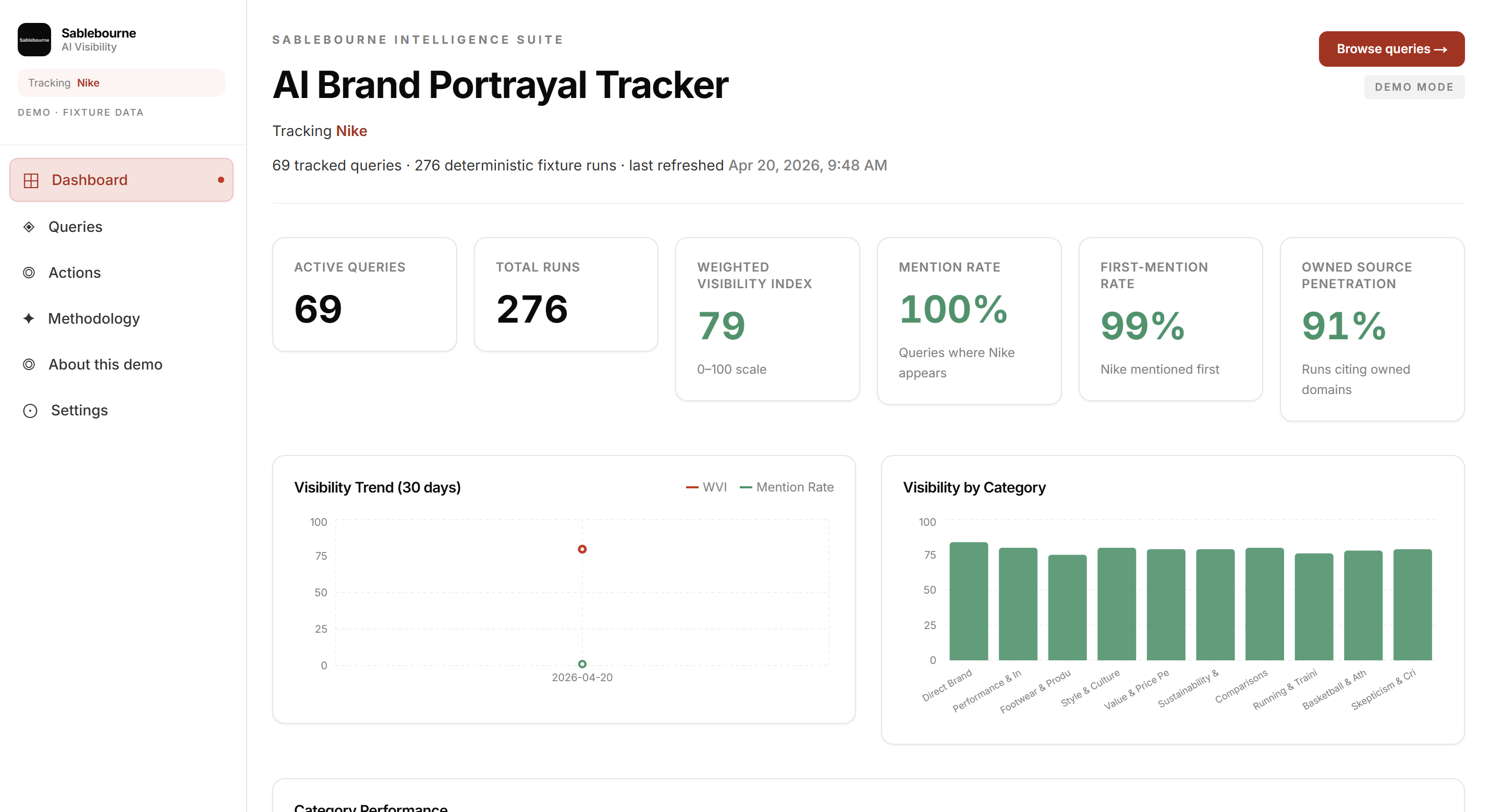
AI Brand Portrayal Tracker is a query-led intelligence layer for AI brand visibility. It runs a curated universe of relevant prompts, captures the answers, extracts the visible sources, analyses how your brand appears, scores performance, and highlights where action is needed.
So instead of asking, "What did the model say this one time?", your team can start asking better questions:
Where are we visible?
Where are we absent?
How are we being framed?
Which sources are shaping the answer?
Which competitors are winning the narrative?
What should we change first?
See whether your brand is mentioned, how prominently it appears, and whether it leads the answer or arrives too late.
Understand how AI frames your brand, from premium and technical to generic, replaceable or under-supported.
See which domains and source types are shaping the answer: owned content, editorial, retail, forums, reviews or reference sources.
Spot where competitors are named first, where they dominate the source mix, and where they are crowding you out.
Track how portrayal changes across runs so you can see movement, not just moments.
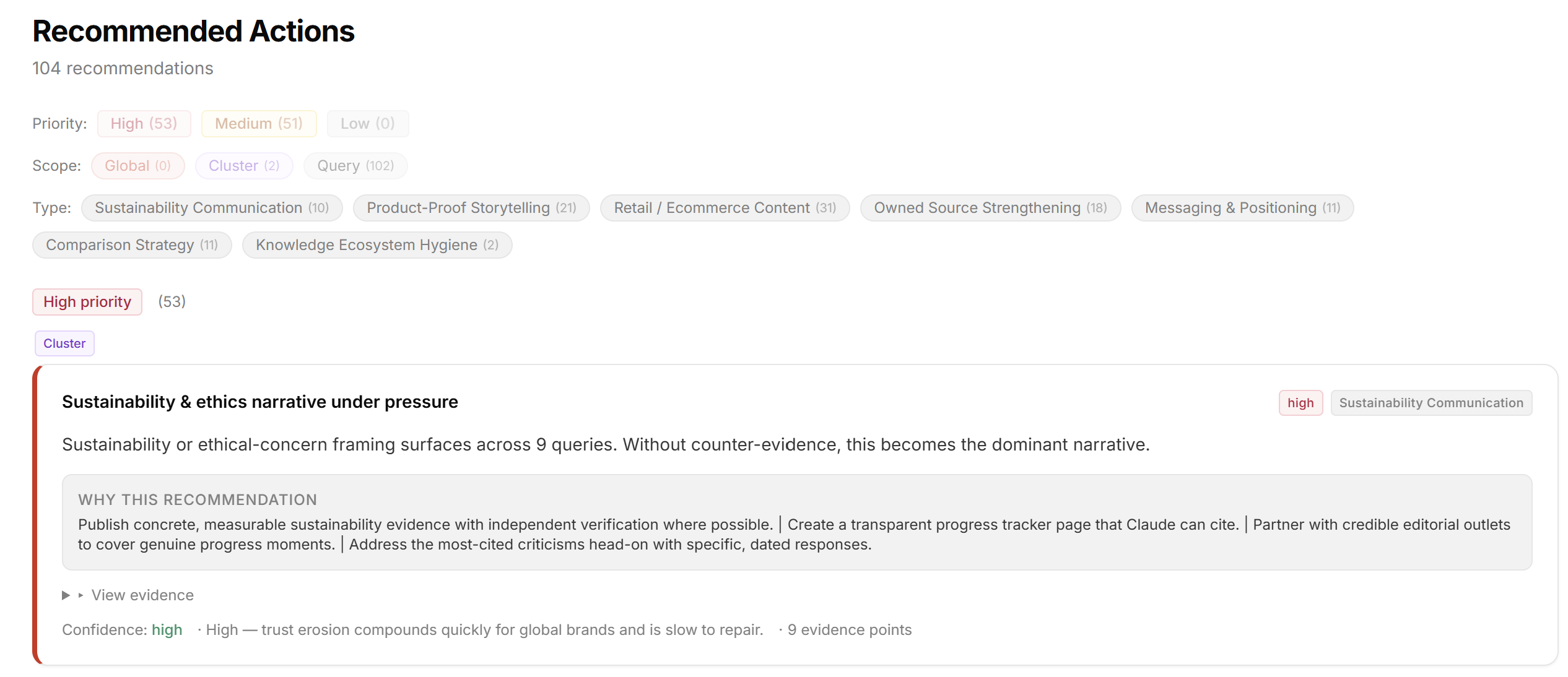
Move from diagnosis to action with evidence-backed recommendations grounded in answer patterns and source signals.
Start with the questions people are most likely to ask: direct brand questions, category prompts, comparisons, use cases, objections and purchase-led queries.
The platform runs those prompts through the selected AI model and stores the answers over time.
It identifies whether your brand appears, how it is framed, which competitors are mentioned, and which sources influence the response.
It uses a transparent scoring model to show visibility strength, source support and where performance is weak.
It surfaces where your brand is strong, where it is weak, and what content, channel, partner or source actions are most likely to improve future portrayal.
AI Brand Portrayal Tracker is not a vanity dashboard. It is designed to help teams make better decisions across brand, content, search, PR, digital intelligence and partner ecosystems.
Identify high-value queries where your brand is absent
Find the categories where competitors are leading
Understand whether owned content is shaping AI answers
Spot weak comparison, education or retailer content
Strengthen the narratives AI is learning from
Track whether interventions are improving portrayal over time
Most AI visibility tools stop at monitoring. Sablebourne goes further.
We care about what the signal means, what it says about the operating conditions behind the brand, and what practical moves will change the outcome.
That is why this product is designed to do more than count mentions. It helps you connect AI portrayal to the real levers inside the business: content quality, discoverability, partner alignment, source strength and narrative clarity.
Because the goal is not to admire the problem. It is to improve the conditions that shape the answer.
Who need a clear view of how brands are being discovered and compared in AI answers.
Who understand that AI discovery is now part of search, and visibility there requires different source strategies.
Who track brand performance and need a new lens on how the market is perceiving competitive positioning.
Who need to understand whether news coverage and earned content are shaping how AI describes the brand.
Who create the material that shapes category narratives and needs to influence AI answers.
Who need partners to represent the brand accurately in retailer descriptions, specs, and reviews that feed AI answers.
What does the platform track?
It tracks how AI answers relevant brand and category queries, whether your brand appears, how it is framed, which sources shape the answer, and where competitors are overtaking you.
Is this just prompt testing?
No. It is structured monitoring. The platform uses a defined query universe, stores runs over time, scores performance, and generates recommendations based on visible patterns.
What makes it different?
It does not stop at visibility. It helps you understand portrayal, source influence, competitor displacement, and what action is most likely to improve future outcomes.
Who uses it?
Brand, SEO, PR, digital intelligence, content, and partner teams use it to make AI discovery more measurable and more manageable.